🤫
This work is password protected.
Incorrect password.
Grubhub · 2014–2016 · Case Study
Getting a new restaurant live on Grubhub took 21 days and required up to 4 internal people to pull it off. It was a manual process built for a smaller network, now straining under demand from emerging markets. We rebuilt it from scratch, self-serve, automated, and done in under 72 hours.
Fig 1: New self-serve onboarding experience for Grubhub restaurant partners
Context
Grubhub had built its restaurant network the hard way. Manually. Sales reps signed contracts, account advisors collected information, and restaurant care teams shepherded new partners through setup. By the time a restaurant started taking orders, an average of 4 people had touched the process and 21 days had passed.
That worked at a certain scale. It stopped working when diner demand began outpacing the network's ability to grow, especially in emerging markets where Grubhub had hungry diners but not enough restaurant options to serve them through the platform.
21
Days from signed contract to taking first order
4
Internal people required per restaurant signup
125K+
Restaurant partners, all manually onboarded
The gaps in the process weren't just slow: they were error-prone. Small mistakes in manual data entry had significant downstream consequences: incorrect menu items, wrong pricing, mismatched operating hours. Each error was a problem that had to be fixed after the fact, often by a restaurant that was already frustrated with the onboarding experience.
Design Objective
The core challenge was clear: How might we scale up our ability to onboard new restaurants and break into new markets with high diner demand? How do we empower restaurants to sign up and start accepting orders entirely on their own?
Three goals shaped the work:
The entire pipeline, from initial sign-up through account activation, needed to work without internal Grubhub involvement for the majority of restaurants.
Every internal touchpoint was a cost center and a delay risk. Removing them was both a business efficiency goal and a restaurant experience goal: fewer handoffs meant fewer points of failure.
Automation and smart defaults would reduce the cognitive load on restaurants and eliminate the category of errors that only happened because humans were entering data by hand.
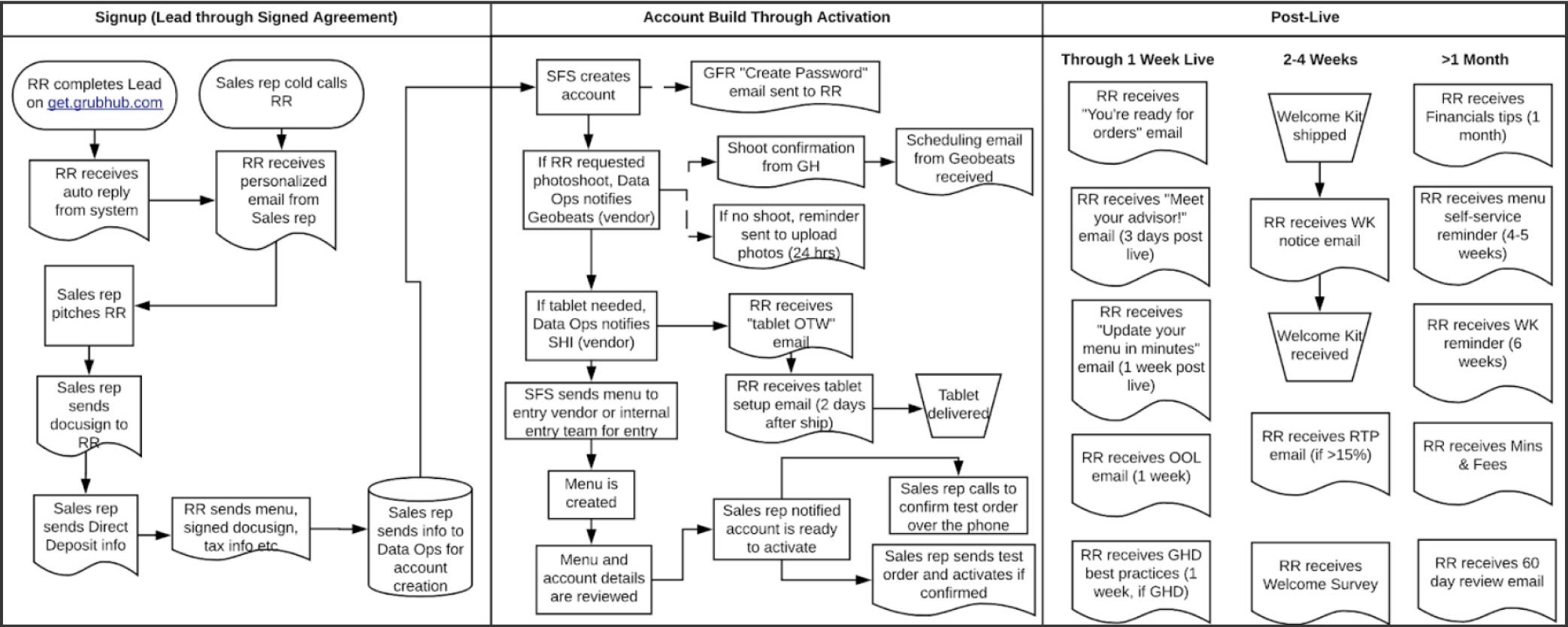
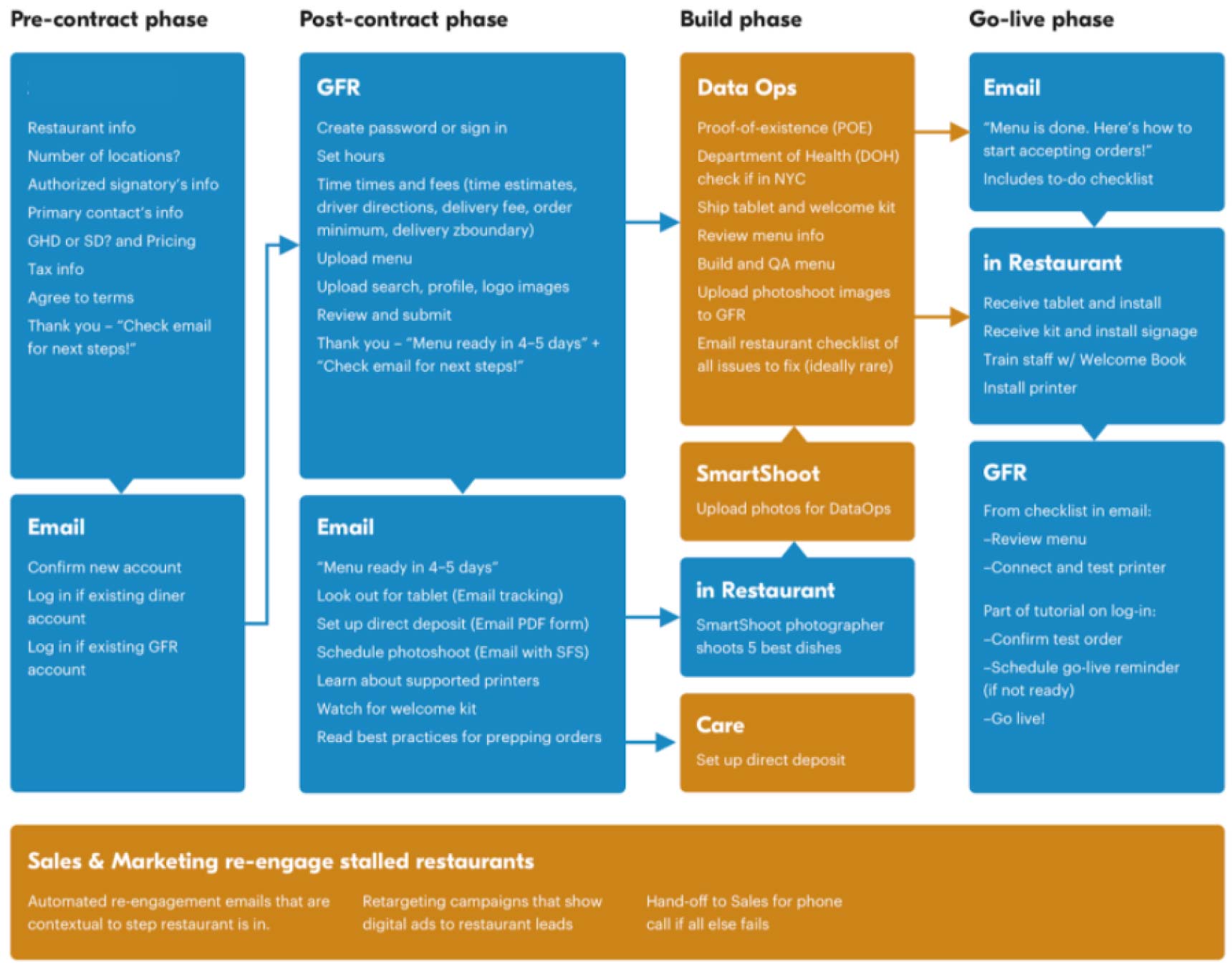
Fig 2: The existing process: fragmented systems map and current state service blueprint
Discovery
The existing sign-up process was cobbled together across multiple interfaces, business units, teams, and areas of responsibility. The gaps were significant, and in many cases unknown to each separate group. My first move was to interview internal stakeholders to build a complete systems map of the current process. What we found was a process that nobody owned end-to-end and nobody fully understood.
With the current state documented, we built a full service blueprint, mapping every step, task, and outcome from initial sign-up through account activation. This design-led discovery effort gave the cross-functional leadership team a complete view of the system for the first time, and created alignment on where the critical gaps were.
I then framed our experience strategy around four principles drawn from The Elements of User Onboarding by Samuel Hulick, adapted for restaurant motivations:
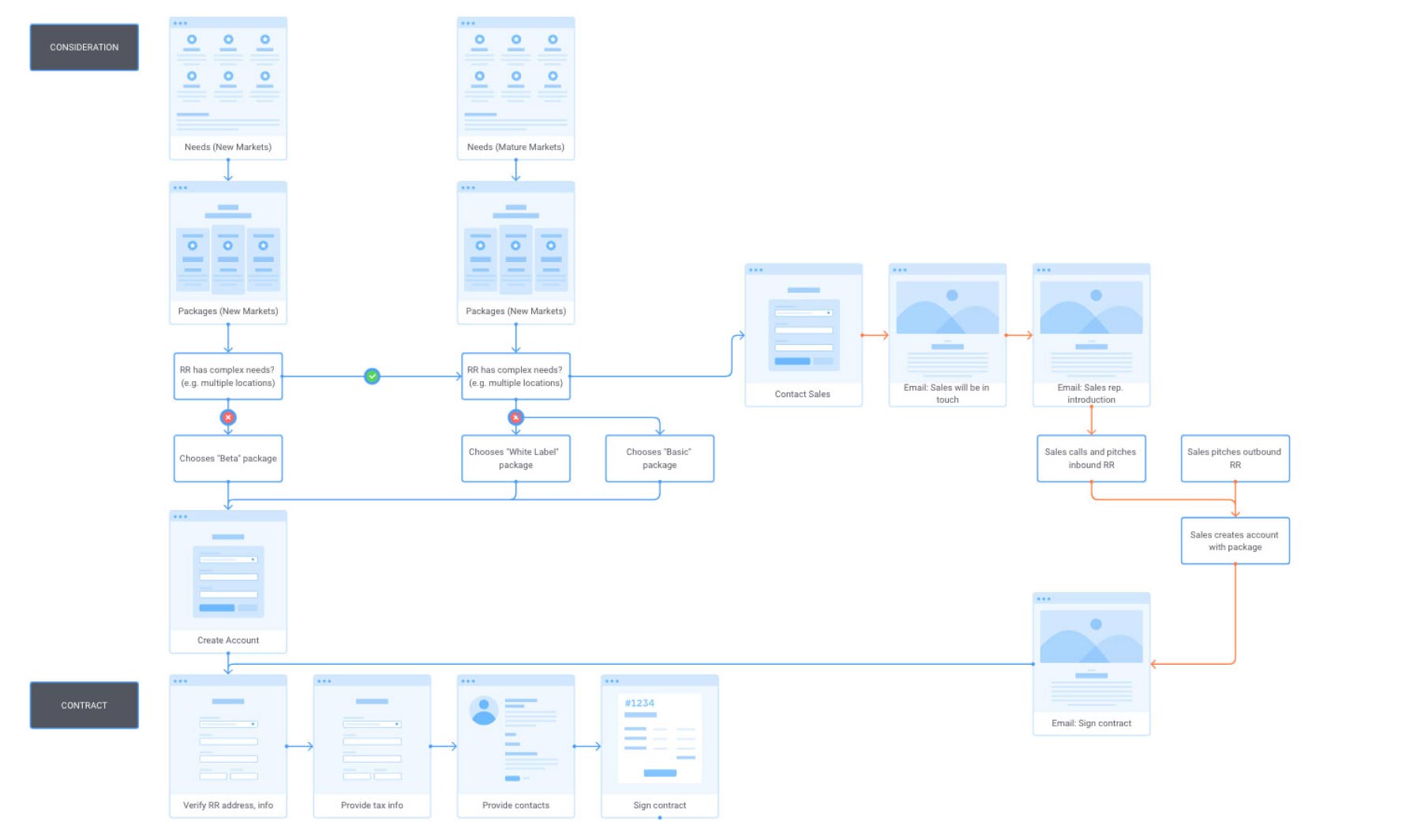
Fig 3: Experience strategy frameworks and improved system flow
The Design
With the experience strategy and new system flow aligned across the cross-functional team, we moved into design and iteration. The new flow was organized around four key moments, each designed to reduce friction, build confidence, and minimize the information a restaurant had to enter from scratch.
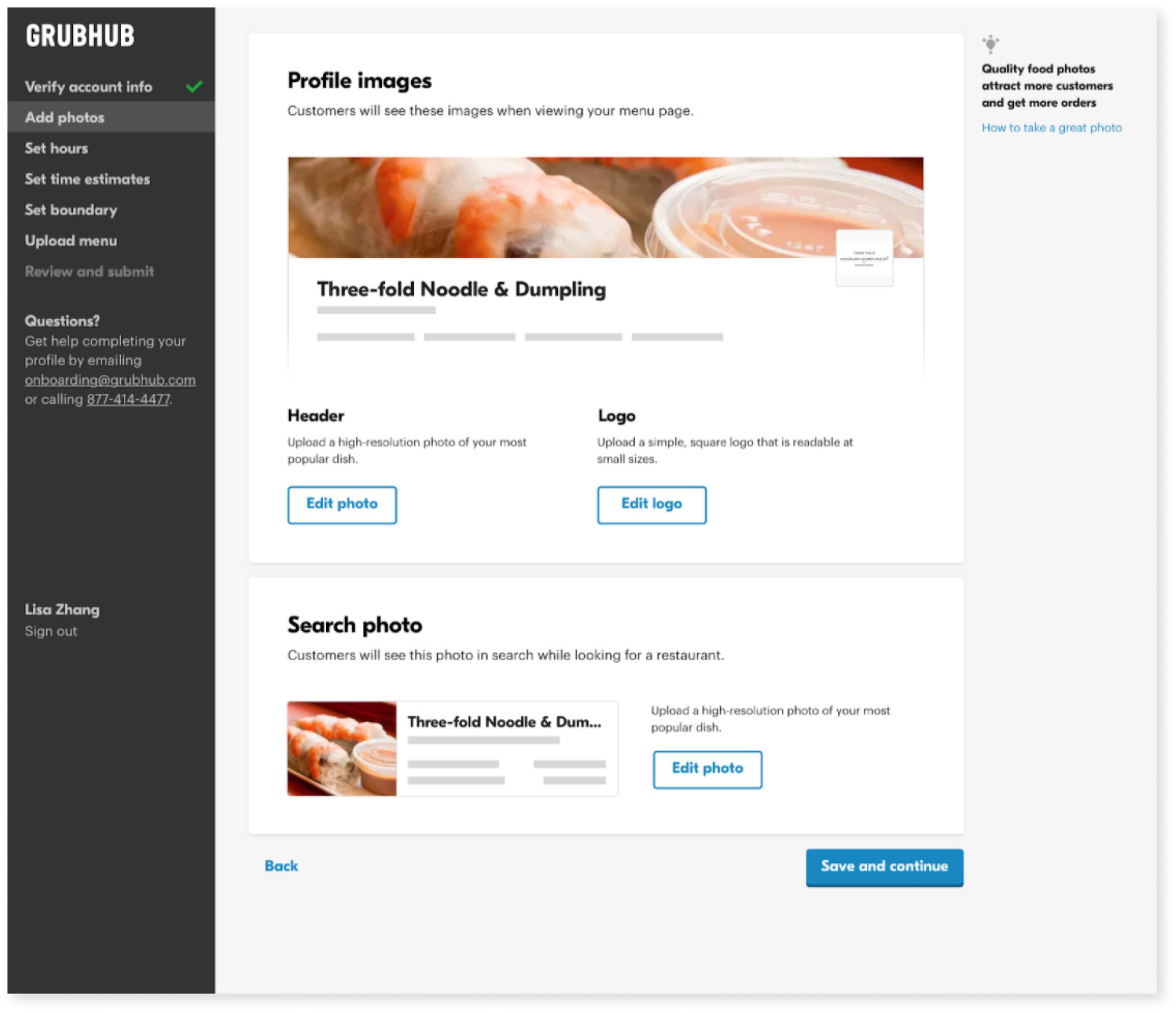
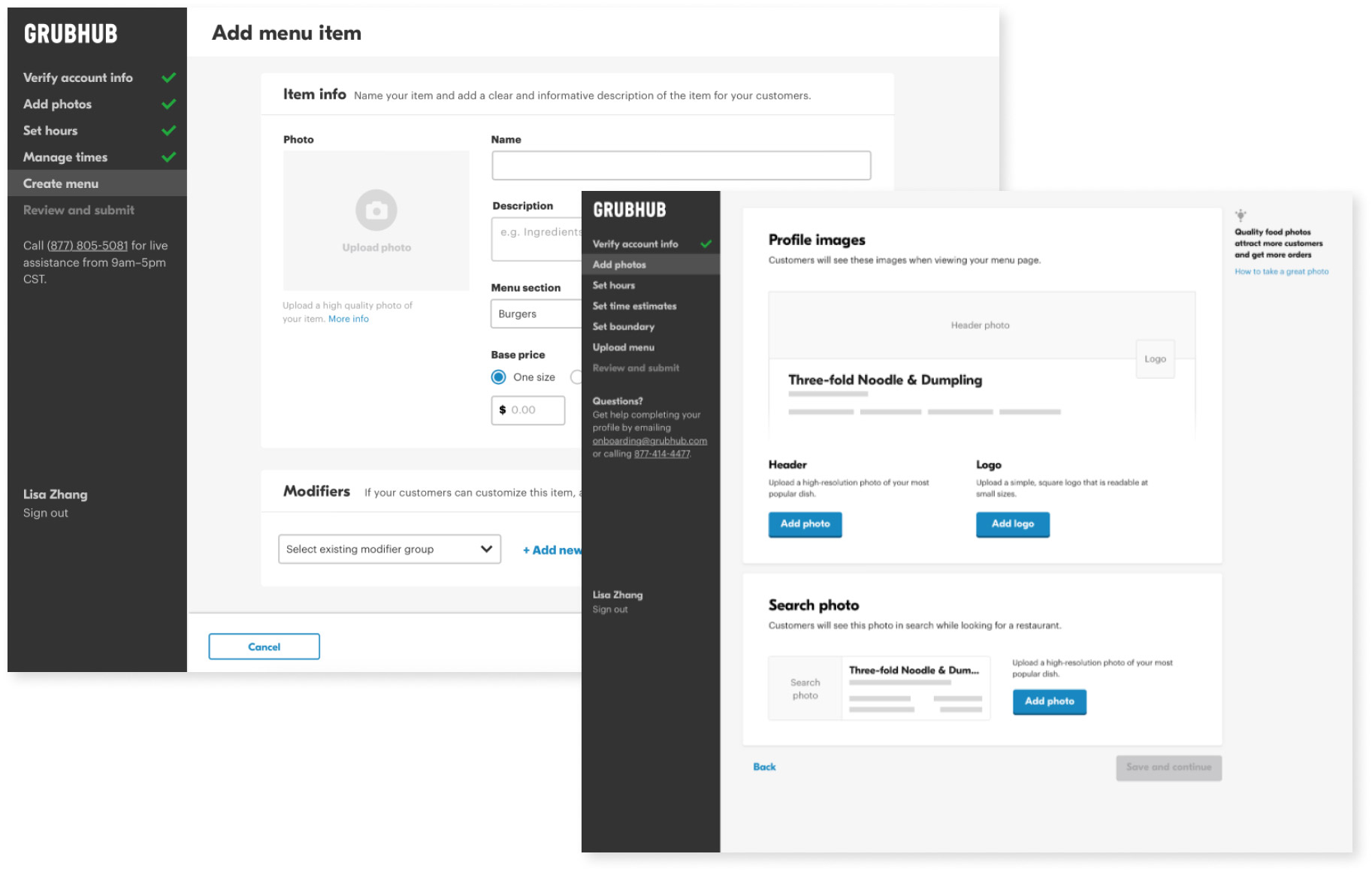
Fig 4: Final design: landing page, sign-up flow, image upload, and confirmation
Results
After months of design, testing, and building, the results were decisive. The new self-service onboarding process required minimal internal effort and fundamentally changed the economics of bringing a new restaurant onto the platform.
86%
Faster: 3 weeks to 3 days
+15%
Higher conversion rate vs. prior sign-up process
72hrs
Average time to go live from sign-up to first order
The 15% conversion improvement was particularly meaningful: it meant the new experience wasn't just faster, it was more convincing. Restaurants that would have dropped off in the old manual process were completing sign-up. And the self-serve infrastructure became the foundation for future expansion into new service models.
What Came Next
2020 proved to be a stress test. New restaurant sign-ups accelerated significantly, and the rise of new service models (a la carte delivery, hybrid group orders, virtual kitchens) created sign-up paths the original system wasn't built for. Three expansion areas defined the next phase of work: