🤫
This work is password protected.
Incorrect password.
Grubhub · 2019–2021 · Case Study
Grubhub's promotions suite was good at acquiring new diners, but it didn't help restaurants build lasting relationships with the ones they already had. We set out to change that by integrating loyalty programs into the promotions experience, and discovered that how you introduce a new concept matters as much as the concept itself.
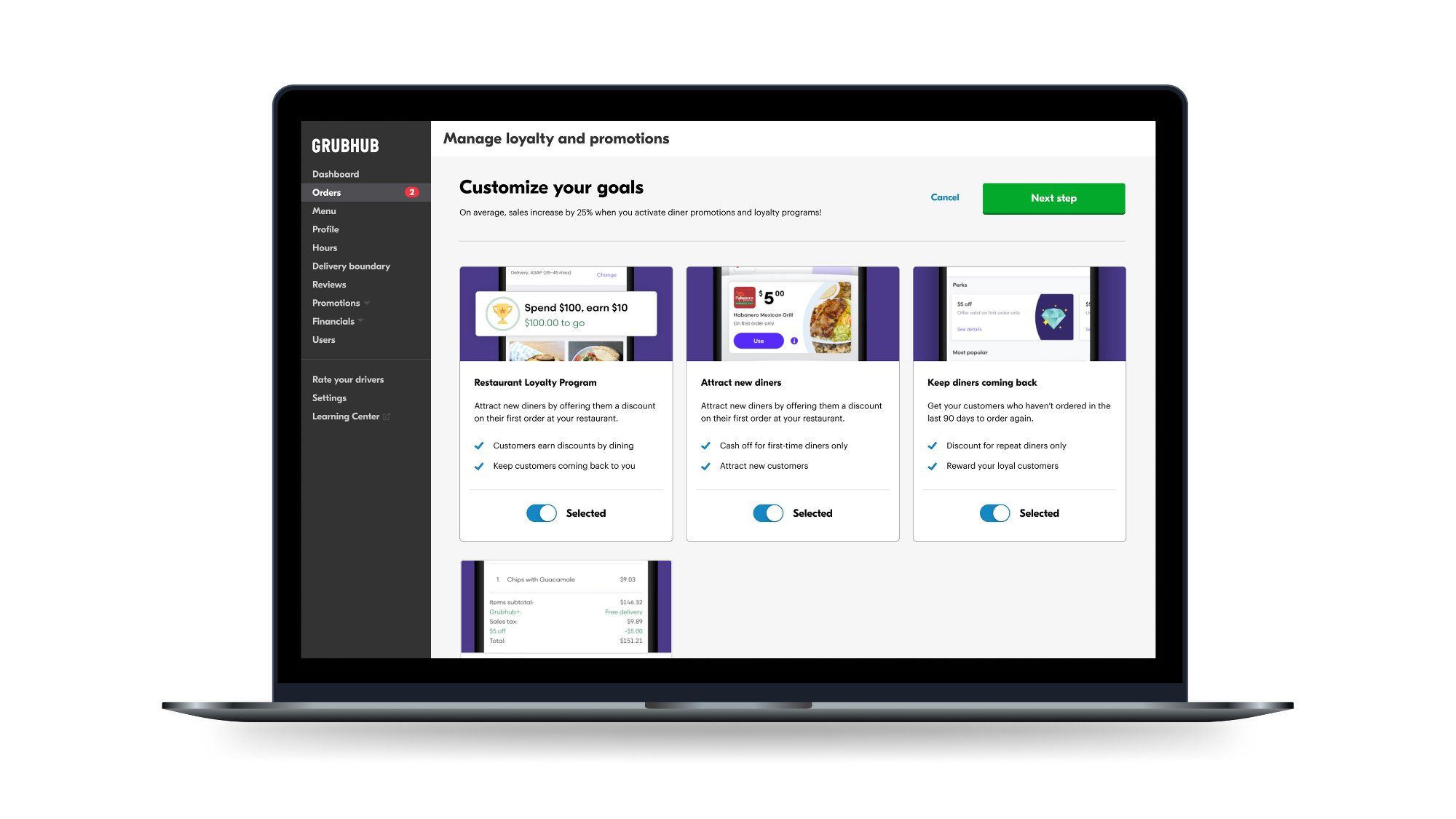
Fig 1: Integrated promotions and loyalty campaign setup · Grubhub restaurant partners
Context
One of the most valuable tools available to Grubhub restaurant partners was promotions, the ability to set up campaigns that attracted new diners and drove orders. The numbers showed promotions were working: 87% of restaurants running an active promotion saw an increase in new customers. But there was a retention gap. First-time diners weren't reliably converting into regulars.
The opportunity: if we could add loyalty programs to the promotions mix, restaurants could reward repeat behavior, building a loyal customer base rather than just acquiring one-time orders.
87%
Of restaurants running promos see increase in new diners
29%
Of new Grubhub diners reorder from same restaurant within 6 months
37K+
SMB restaurants running active promotions
My role was Design Manager and contributor: I led the team and pulled in a Principal Designer based on his strengths in visual design and storytelling to execute the design spike alongside me.
What Restaurants Were Saying
A round of user research and a restaurant roundtable session shaped the early product strategy. Three themes came through clearly:
"I have a customer that comes in once every 1–2 days. I also have a customer that is very on top of what I share on social media, he shares my posts and brings others in. I consider him loyal in his ability to bring others to the restaurant."
— Ethan from Hermosa
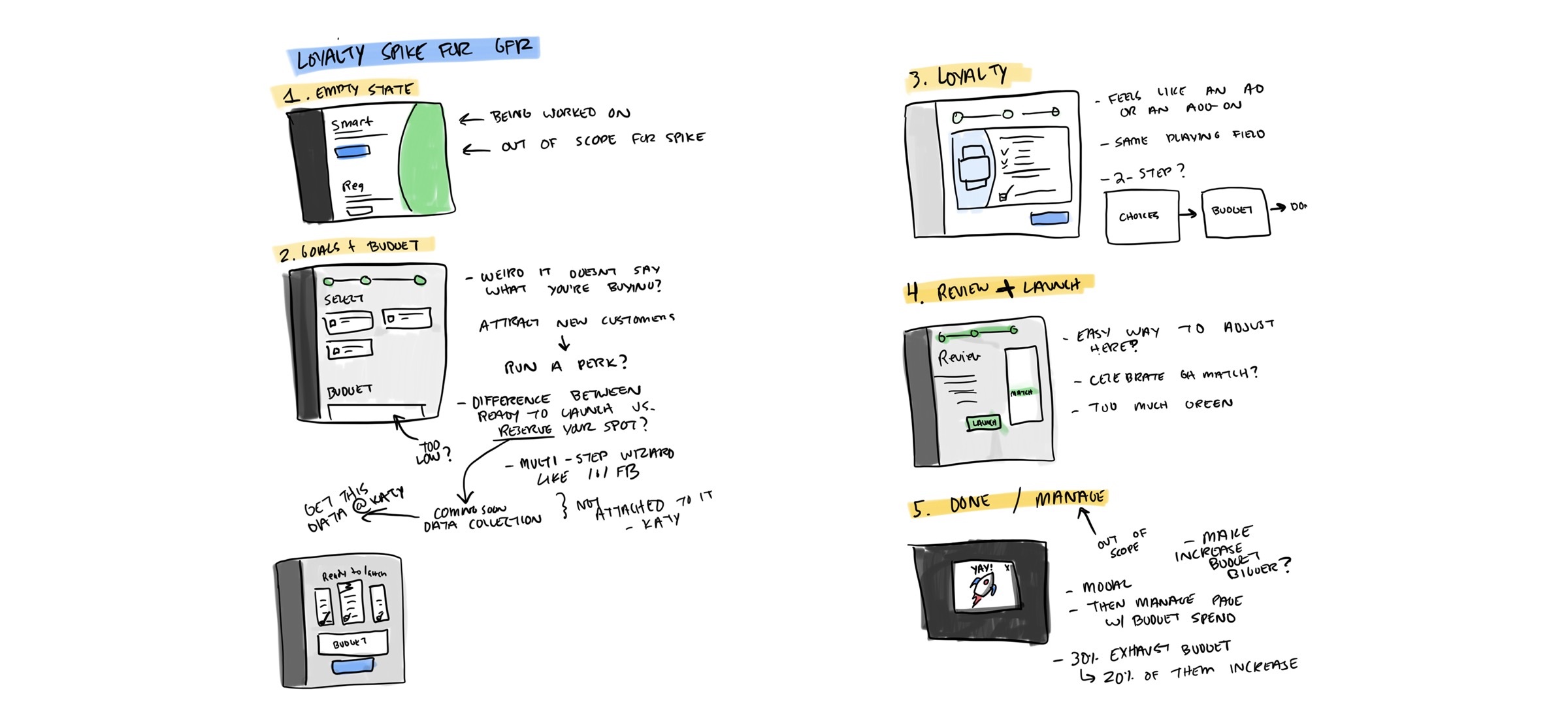
Fig 2: Sketches from a design discovery spike used to illustrate and align on restaurant loyalty user goals
Business Goals
Loyalty couldn't just benefit restaurants, it had to fit within the broader promotions business model and drive Grubhub revenue alongside restaurant GFS. We framed three interconnected goals that the design had to serve simultaneously:
Drive repeat behavior at the restaurant level — turn occasional diners into regulars through well-designed incentive structures.
Expand the promotions value proposition for diners — more rewarding offers, more reasons to use Grubhub over competitors.
Loyalty should generate more orders and higher-value transactions — not just repeat visits at reduced margins.
Two key design challenges shaped the work: How might we encourage restaurants to participate in loyalty through a goal-driven selection model? And how do we make the value proposition of a loyalty-based promotion campaign clear through concise visual design?
The Design
The existing promotions creation flow had three steps: a landing page, goal/budget selection, and review and launch. Loyalty was initially a separate setup step, disconnected from the goal-selection logic that determined campaign type. We redesigned the flow to weave loyalty in as a natural part of how restaurants set up any promotion campaign.
Four screens drove the experience:
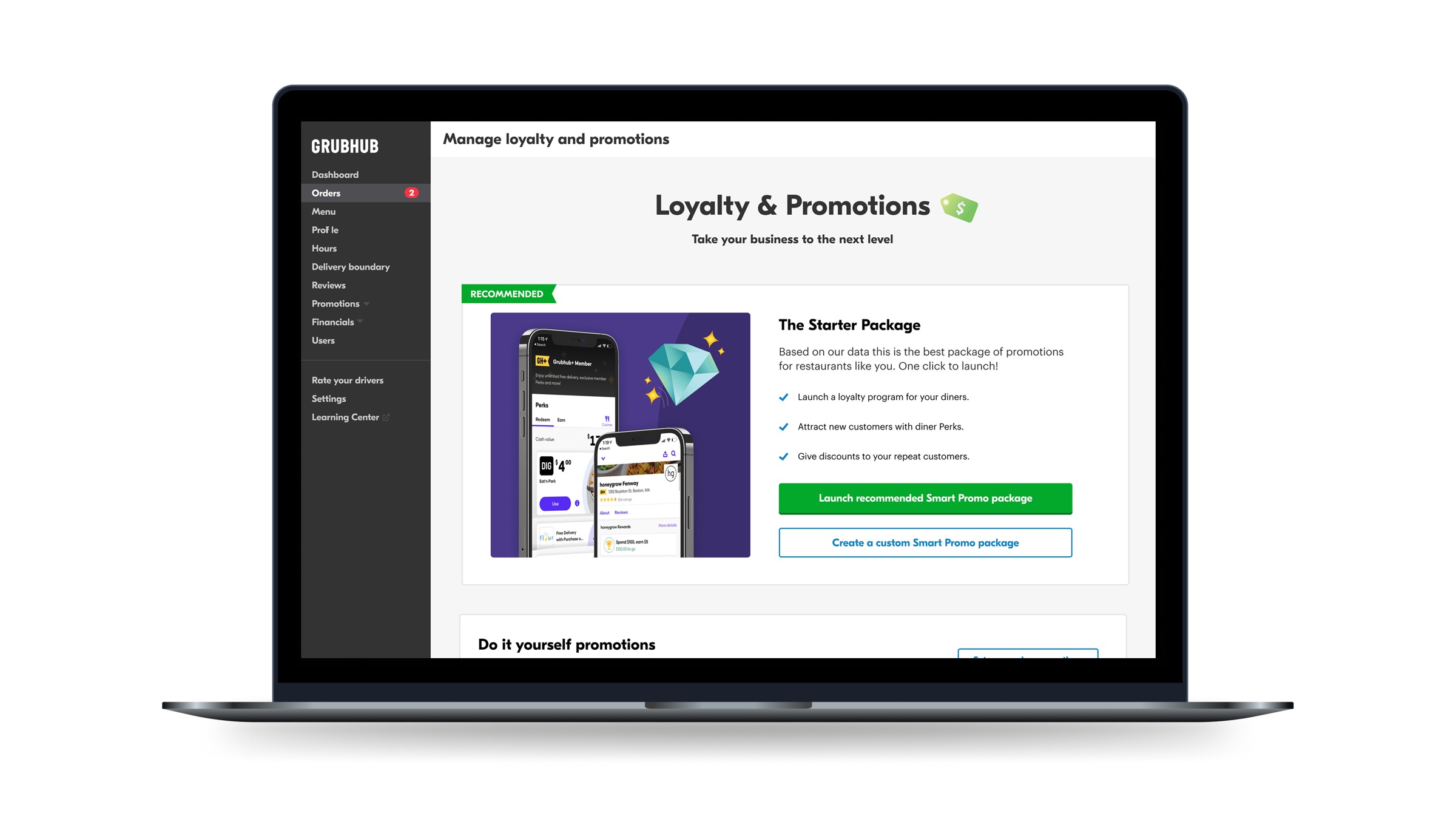
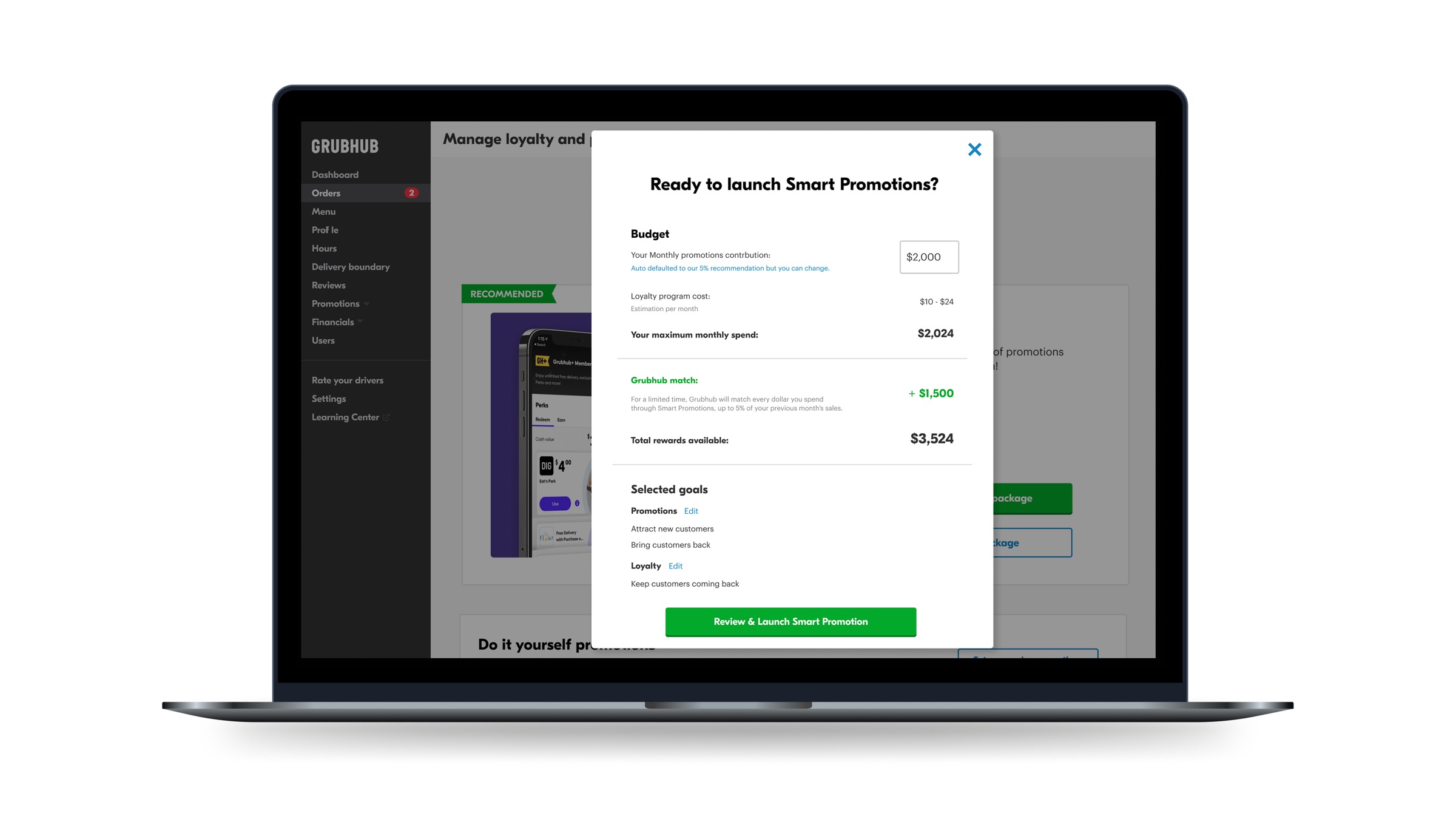
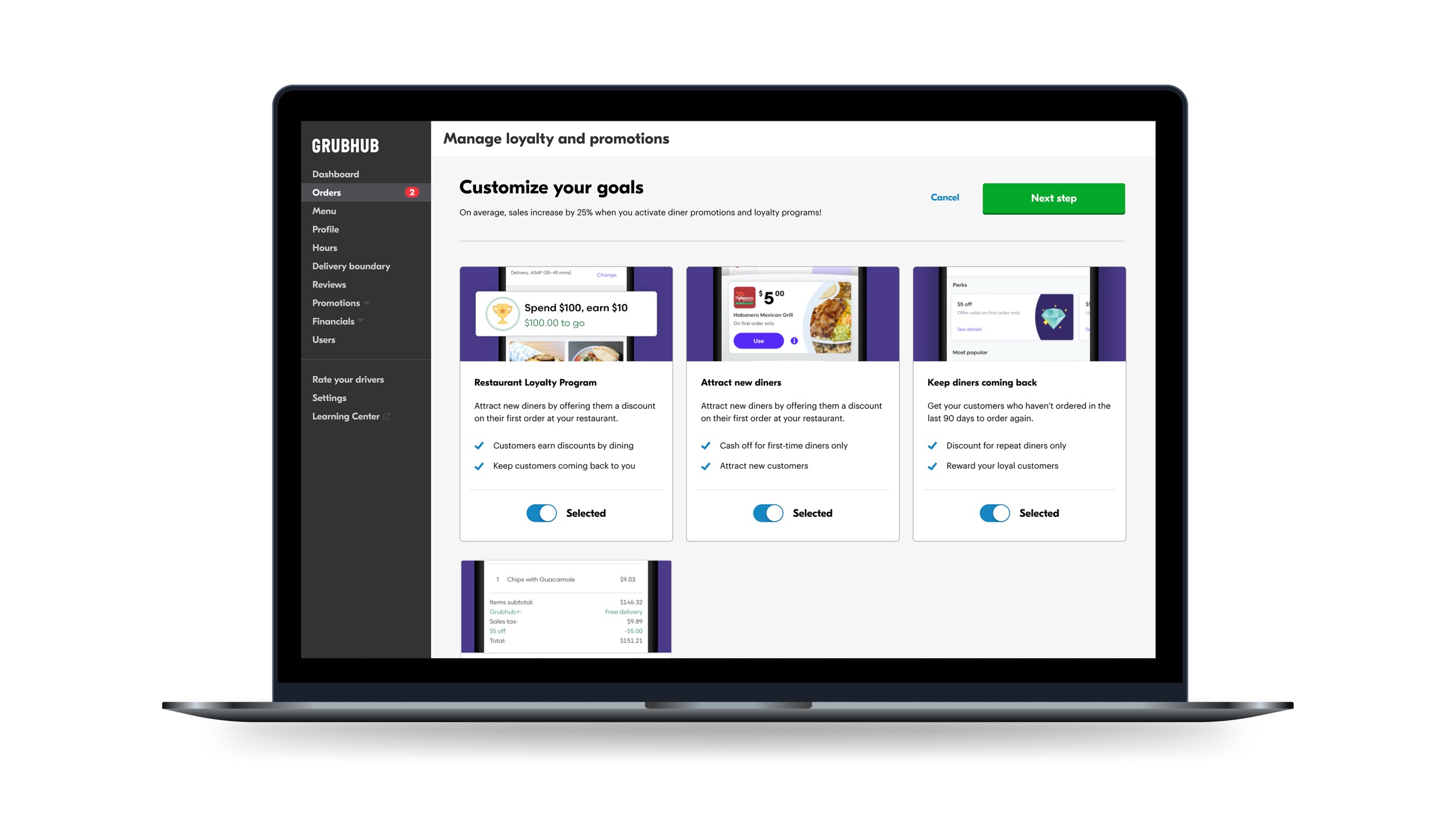
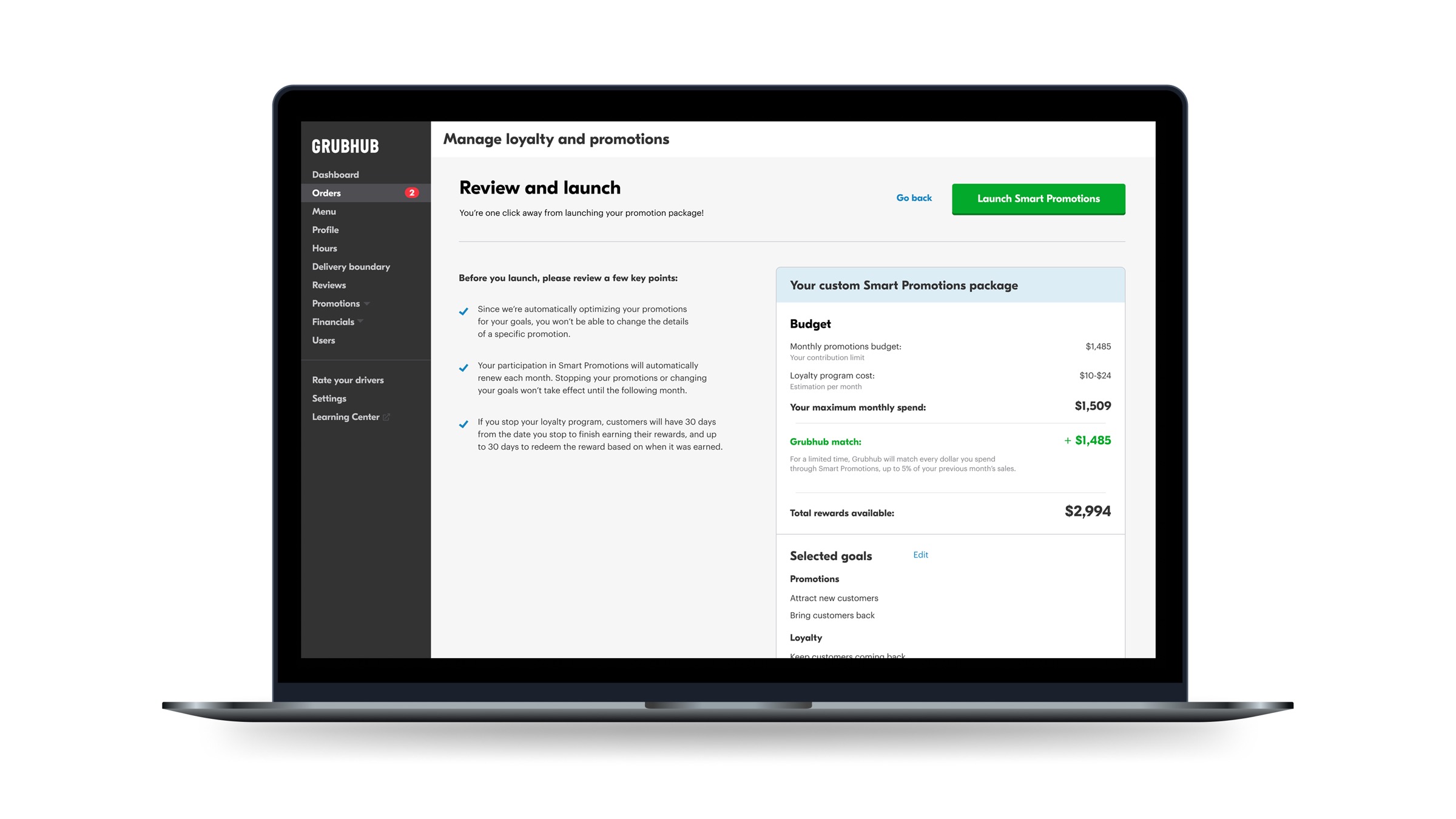
Fig 3: Key screens: goal selection, budget setting, promotions landing, and review & launch
User Testing
With an agreed-upon user flow in place, we partnered with the UX Research team to conduct rounds of user testing with restaurant partners. The results were strong on the core task and revealed a meaningful gap in the "easy opt-in" concept we'd been excited about.
9/10
Participants set up a new loyalty campaign unprompted
🙅
User confidence was low to launch directly from the landing page
18%
Increase in restaurants running new promotion types
The "Easy Opt-in" concept, a one-step quick launch directly from the landing page, tested poorly. Restaurants didn't have enough context to feel confident committing to a campaign without first understanding what they were signing up for. The risk of accidental launches was real. We moved this feature to a post-MVP phase and kept the primary flow anchored in the goal-selection model, which gave restaurants the context they needed before any budget commitment.
What's Next